by admin | Oct 14, 2025 | |
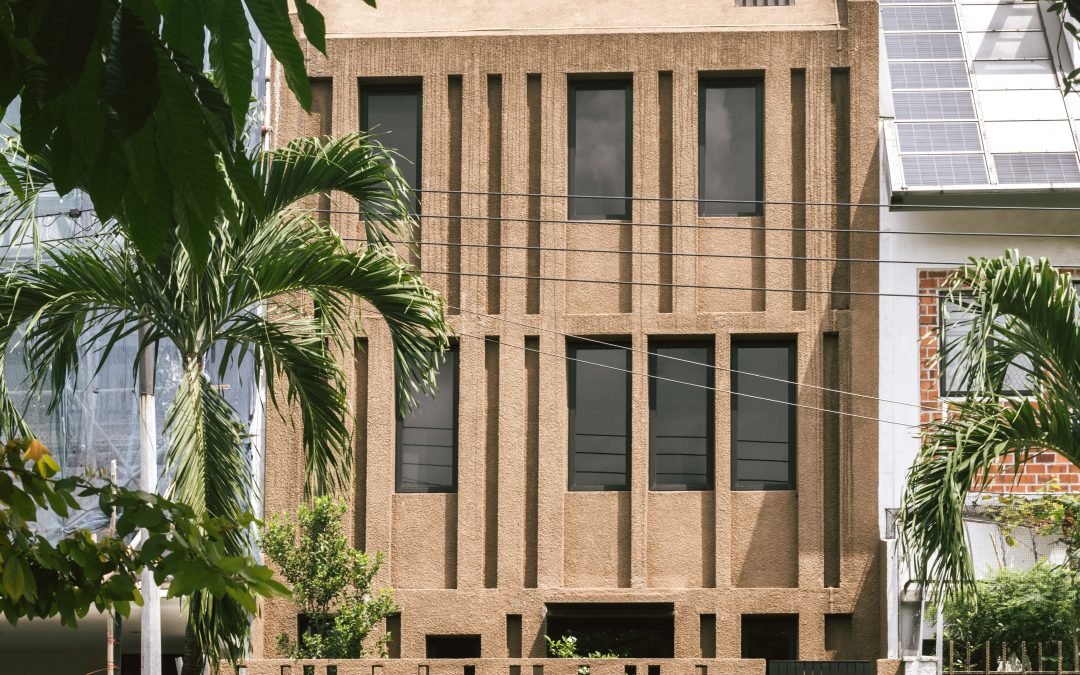
Back to Back House, Singapore A multi-generational home designed to embody the spirit of community living at its core despite its small, long and narrow site. Building envelope control requirement provides an opportunity to re-define the spatial strategy of a multi-generational house where the building height is maximized to create multitude of spaces within the resultant space. Verticality becomes a design strategy to segregate and define different type of spaces with varying degree of privacy. The challenges of the site where it is directly facing east west orientation gave us an opportunity to rethink the mainstream lexicons of Tropical Architecture while addressing the fundamental issues of our intense tropical rain and sun. Unlike many conventional houses, the house is designed to have 2 front elevations. There is no rear elevation in this house. This allows us to design the building elevations as a direct confrontation of the weather elements while maintaining a very interesting façade without adhering to the conventional architectural hierarchy of front and rear elevation. The external wall is constructed with double-layer brick walls to provide inherent heat insulation to the internal spaces. Top-hung windows are placed to be fully openable and allow for direct cross ventilation across the living spaces to ensure thermal comfort. Clients and visitors have often times felt pleasantly surprised and delighted that the temperature within the house is often times much cooler despite the heat outside. The external facade also embraces the “after-effects” of the intense rain and sun where Singapore intense tropical climate often left buildings looking dilapidated after a few years. This is addressed via usage of vertical elements...
by admin | Mar 3, 2021 | |
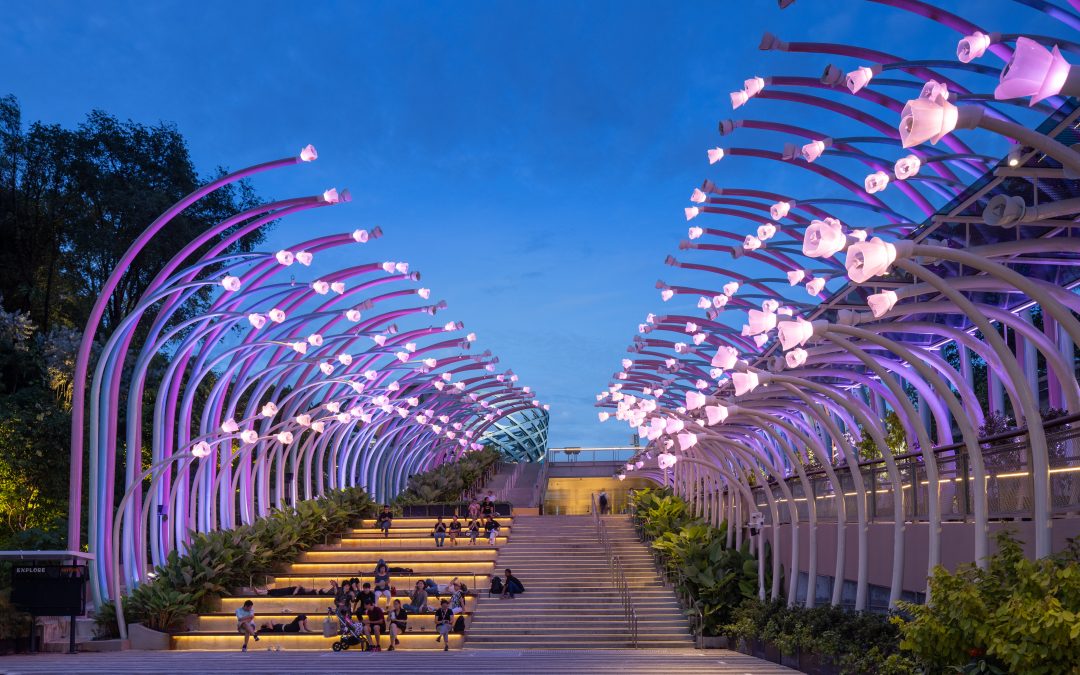
Sentosa Sensoryscape, Singapore The overall concept for Sentosa Sensoryscape is as an experiential sensory public park, in alignment with the broader Sentosa 2030 Master Plan strategies. The site is located at the key North-South connection route linking the urban heart to the natural wonders of Sentosa’s southern beaches & forests. The ecological walk that links Sentosa together is conceived as a destination in itself. Our proposal consists of two parts- the walk & the vessels. The walk is complimented by a landscape of ecological bands & the vessels are complimented by gardens containing distillations of Sentosa’s nature. These series of garden focuses around the five senses, revealing unusual qualities of the ecology. The gardens are contained in vessels that open a different sensation to the walk. Each of the vessels has it’s own expression yet it is clearly part of a collection. The vessels are placed to the side of the walk to allow views out to the landscape. The design proposal addresses the objectives of enhancing connectivity, capacity, sense of arrival, wayfinding, public amenities and enlivening the night ambiance. Building Type: Outdoor spaces Location: Sentosa, Singapore Site Area: 31792sqm Status: In construction Design Architect: Serie & Multiply Architects Project Architect: Axis Architects Planners ...
by admin | Jan 30, 2020 | |
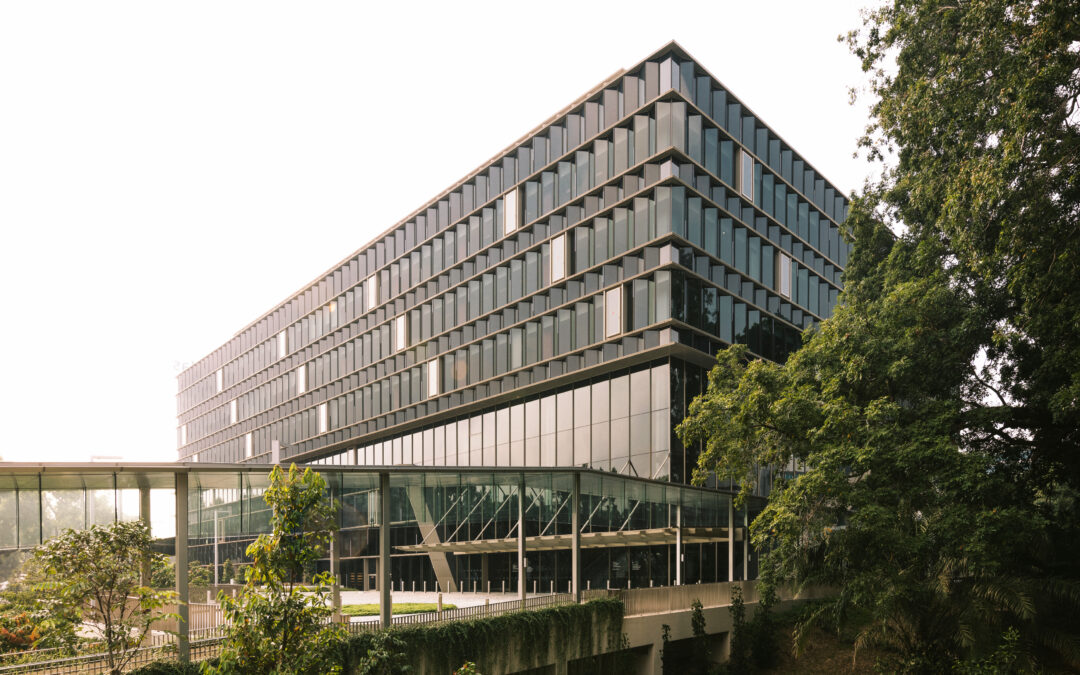
5 Science Park Drive, Cluster 1, Singapore 5 Science Park Drive is the latest building in Singapore’s Science Park, Asia’s leading R&D and technology location done in collaboration with Serie Architects, London. Officially opened by Deputy Prime Minister Heng Swee Keat, 5SPD re-works the model for a technology building to reflect the needs of emerging e-commerce and research organisations. This flagship building will form the basis of the re-development of Science Park Cluster 1. The Science Park model of the 1990s, with buildings isolated from one another by under-utilized landscape is no longer adequate for today’s workspaces that are more social in nature. The first of more than five buildings in the cluster, 5SPD is designed to ensure that common spaces are visible, accessible and nourished with amenities. The building features a three-storey extended lobby or ‘city room’ that incorporates a series of cascading platforms incorporating a café, break-out spaces and a small auditorium. This space is focused on collaboration, discussion and networking. The floor plans are designed to maximise flexibility. A typical floorplate has over 4,000sqm in open plan space and column-free spans of 20 metres. Centralized circulation with highly efficient double-loaded corridors allows the building to be configured for single or multi-tenant use. The façade features high performance glazing set into an alternating ‘accordion’ design that is animated at night with a re-programmable LED light system. The design combines vision and spandrel glazing to maximise views while mitigating solar gain. The adjacent car park has been covered with extensive landscaping and amenities including exercise pavilions. This will eventually form a shared park for a cluster of...
by admin | Jan 2, 2020 | |
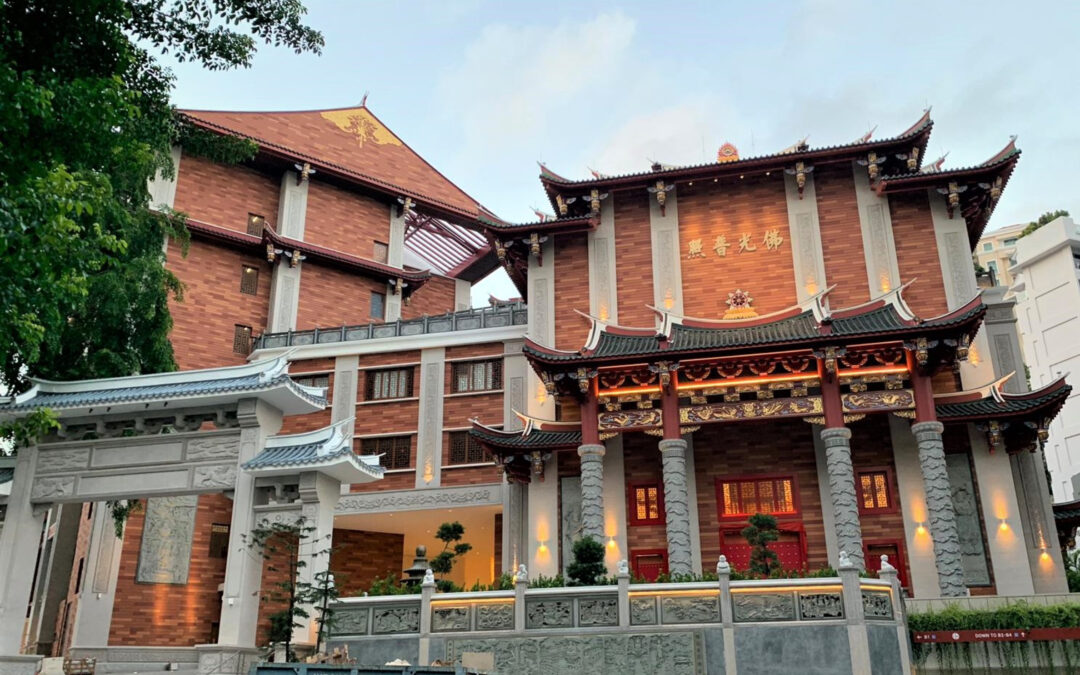
Singapore Buddhist Lodge, Singapore Awards: International Lighting Design Awards 2020- Award of Merit Building Type: Religious Location: Kim Yam Road, Singapore Site Area: 5400 sqm Gross Floor Area: 11450 sqm Status: Completed 2018 Photography credits: ND Photography ...
by admin | Dec 27, 2019 | |
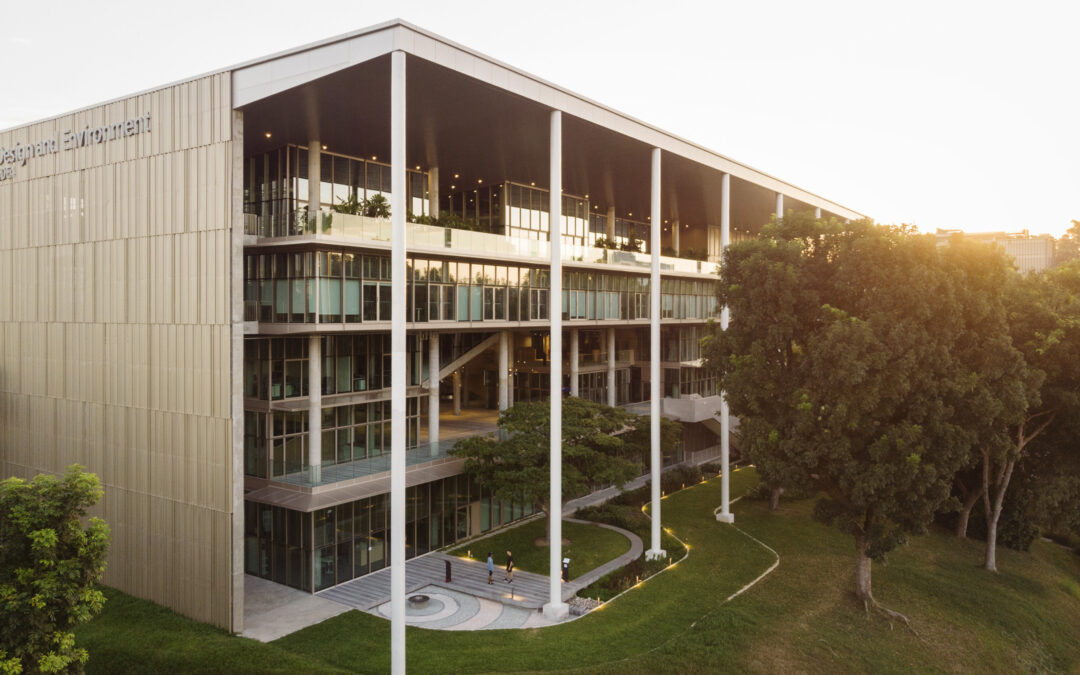
NUS School of Design & Environment, Singapore Inspired by the traditional language of tropical architecture, SDE is designed to be a net zero energy building. In the tropics, the challenge of energy efficiency is essentially mitigating the force of the sun by both shade and ventilation. For this reason, vernacular architecture in the tropics have used an architectural language of open platforms. These platforms form space for occupation, create shade from the sun and with a lack of emphasis on solid walls facilitates natural ventilation. Beyond this functional requirement, the building seeks to create a symbolic architectural presence with its zero carbon target intended to be a model example to inspire students and practitioners. In recognition of tropical architectural precedents, the proposal starts not with the definition of enclosed spaces but with a series of raised horizontal planes. These planes are loosely stacked and configured to facilitate a range of different activities. Each plane is extended horizontally to provide shade for the space below. Glazing that can be completely folded open and uninterrupted internal spaces facilitate excellent natural ventilation. Uniting these various planes into an architectural whole is a spectacular over-sailing roof which shades the whole building. The surface of the roof is in essence a piece of raised ground thickened at the centre to absorb trees and other greenery. Photovoltaic cells arrayed along the edge of the roof support on-site energy generation and other programs including an open air theatre and a small construction test bed supporting the school’s research agenda. One of the challenges was to create shelter to mitigate the morning and early evening sun...

Recent Comments